
Several species of bark beetles breed in pines in the Great Plains. Larvae are usually C-shaped, legless, and white with brown heads. Adults range from 3 to 10 mm long and are brown or black.
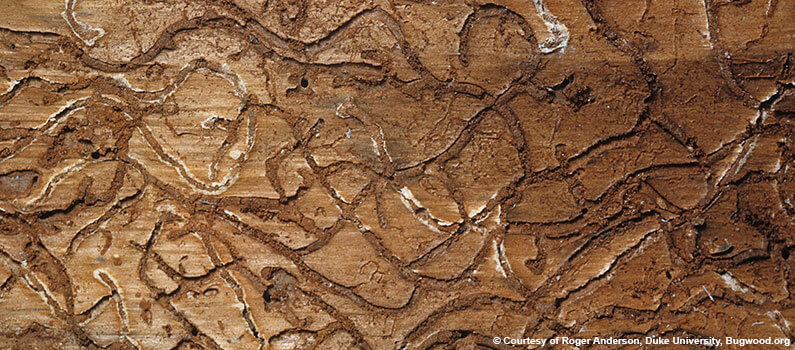
If winters are not severe enough, most bark beetle species can live over winter as adults, larvae, or eggs. Eggs are laid in galleries constructed between the bark and wood, and larval feeding galleries radiate from these egg galleries. The number of generations per year can vary from one to three or more depending upon the species involved and the severity of winter.
Gallery patterns, vigor of trees attacked, and site of attack vary with the species. Small holes in the bark, pitch masses on the bark, and boring dust in crevices and at the base of the tree are th first signs of attack. Infested trees have a characteristic blue-gray sapwood, caused by blue stain fungi, which the beetles introduce. Feeding by larvae and the accompanying spread of blue stain fungi eventually girdle infested trees. Needles on girdled trees turn a characteristic reddish-brown color. Group-killing of trees is characteristic of all species.