
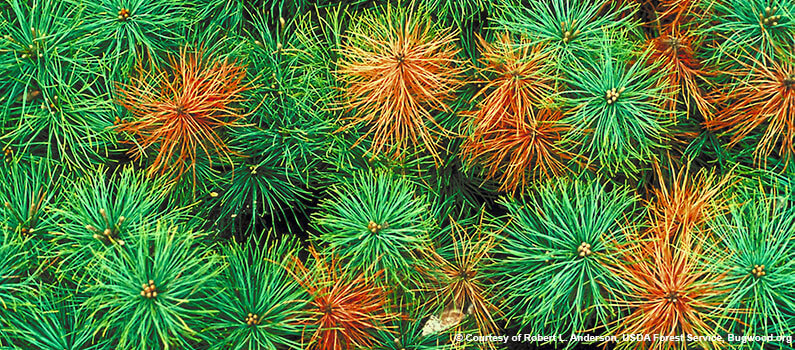
Diplodia Tip Blight, formerly known as Sphaeropsis Tip Blight, is one of the most damaging diseases of pines in Nebraska. It is caused by Sphaeropsis sapinea, and causes browning and death of branch tips. The fungus severely affects Austrian pine, but can also infect Ponderosa, Scotts and Mugo pine. Infection kills major branches and may even kill the entire tree under high disease pressure.
The fungus overwinters as fruiting bodies (pycnidia) on needles, fascicle sheaths, the scales of second-year seed cones, and bark. Conidiospores are released from pycnidia in the spring during periods of wet weather. The spores are rain splashed to shoots. High humidity is necessary for spore germination and infection. Needle infection occurs through stomata; succulent stems are infected directly through the epidermis. New shoots are most susceptible for a two-week period which begin at bud break. Sphaeropsis sapinea rapidly becomes established and eventually kills the shoot. Older shoots may become infected if they have been injured by hail, insects or pruning. Pycnidia from a current season infection are formed in late summer. While this is primarily a disease of mature plants (30 years or older), young plants may become infected if they are caught in a spore shower from nearby mature trees.